Certification Influences on Prize Mechanics Within Expanding Casino Software Collections
Written by Bianca Schmitz · Jul 20, 2026

Certification Influences on Prize Mechanics Within Expanding Casino Software Collections
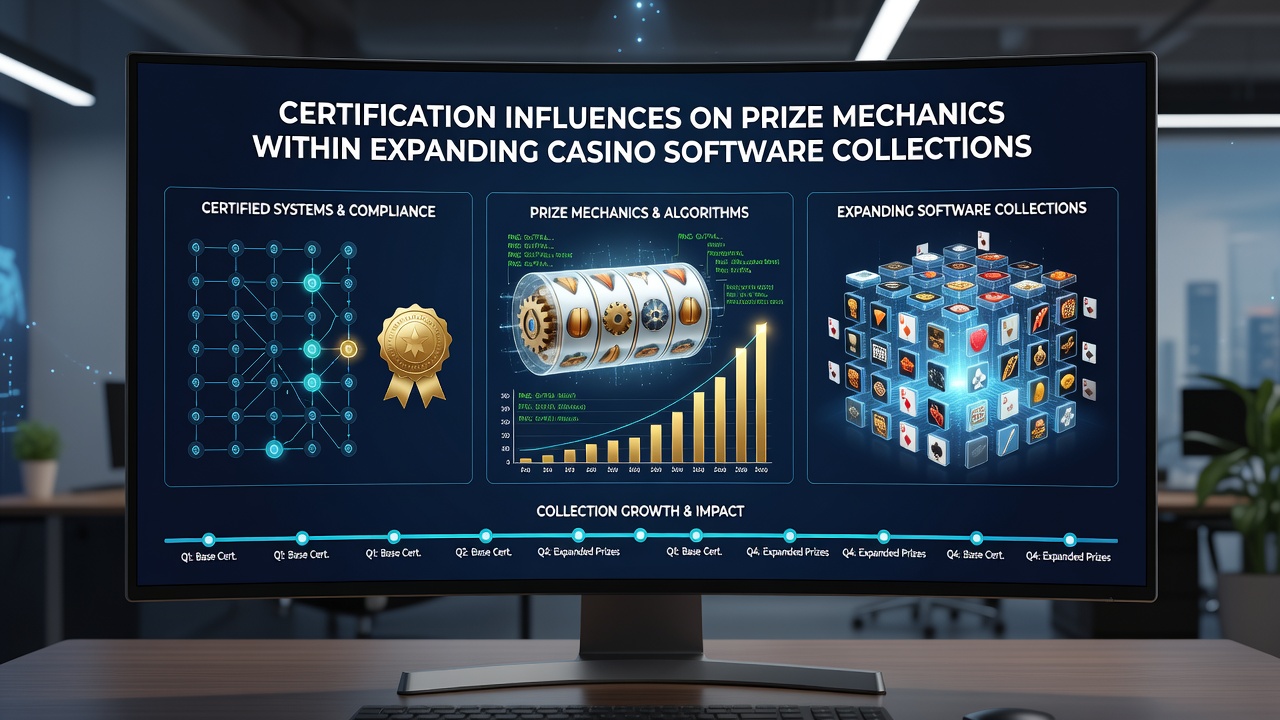
Certification processes shape prize mechanics as casino software collections expand, with independent testing laboratories verifying random number generators and payout algorithms before providers release new titles. These approvals ensure that jackpot triggers, bonus round frequencies, and prize distributions align with regulatory standards across multiple jurisdictions, while software portfolios grow through additional games and features.
Certification Standards and Their Direct Effects on Prize Structures
Testing agencies evaluate prize mechanics through statistical analysis of millions of simulated spins, confirming that progressive jackpots and fixed prizes meet minimum return-to-player thresholds. Providers integrate these requirements into development pipelines so that each new game added to expanding collections maintains consistent probability models, which prevents discrepancies when players move between titles from the same portfolio.
Data from certified systems shows that RNG seeds undergo continuous reseeding during gameplay, directly influencing how often layered bonus triggers activate in multi-game environments. Observers note that collections incorporating games from multiple providers must pass unified certification reviews to maintain prize integrity across platforms.
Expansion Dynamics in Software Portfolios
As collections scale, certification timelines extend because each additional title requires separate validation of its prize mechanics, including any shared progressive networks linking older and newer releases. This process affects release schedules, with providers coordinating testing phases to avoid bottlenecks when introducing dozens of new games simultaneously.
Regulatory bodies in different regions impose varying requirements on prize caps and disclosure rules, forcing software developers to adjust mechanic parameters during certification. For instance, certain North American standards emphasize transparent jackpot seeding methods, whereas other frameworks focus on audit trails for bonus prize allocations.
Regulatory Frameworks Across Jurisdictions
The Nevada Gaming Control Board maintains detailed guidelines that tie certification outcomes to prize distribution fairness, requiring providers to document how expanding collections handle cross-game jackpot contributions. Similar oversight appears in other markets, where authorities review mechanic modifications before approving portfolio updates.
By July 2026, several independent studios had aligned their certification submissions with updated technical standards from multiple testing labs, resulting in standardized approaches to prize layering across handheld and desktop platforms. These alignments allowed collections to incorporate new volatility settings without retesting entire back catalogs.
Technical Integration Challenges
Software engineers embed certification-compliant code modules that govern prize calculation engines, ensuring that expansions do not disrupt existing payout sequences in live collections. When providers merge portfolios through acquisitions, unified certification audits verify that combined prize mechanics continue to operate within approved parameters.
Studies from research institutions indicate that certified RNG implementations reduce variance in jackpot hit frequencies across large game libraries, supporting stable prize delivery even as collection sizes increase. Providers often schedule recertification cycles every twelve to eighteen months to accommodate incremental mechanic refinements.
Conclusion
Certification remains central to maintaining prize mechanics integrity within growing casino software collections, as it enforces verifiable standards on randomness and distribution across expanding libraries. Regulatory coordination and technical adaptations continue to guide how providers manage these processes through ongoing portfolio development.