How Mid-Tier Studios Refine Layered Prize Triggers in Demo Environments to Adapt Jackpot Mechanics for Cross-Device Software Portfolios
Written by Logan Carter · Jul 25, 2026

How Mid-Tier Studios Refine Layered Prize Triggers in Demo Environments to Adapt Jackpot Mechanics for Cross-Device Software Portfolios
Mid-tier studios have developed systematic approaches to refining layered prize triggers within demo environments, allowing them to adjust jackpot mechanics across multiple device types in their software portfolios. These studios operate between large-scale providers and smaller independents, focusing on modular systems that respond to varying screen sizes, input methods, and network conditions while maintaining consistent prize distribution patterns. Data from industry analyses shows that such refinements often occur through iterative testing cycles conducted in controlled demo setups before full deployment.
Core Mechanics of Layered Prize Triggers
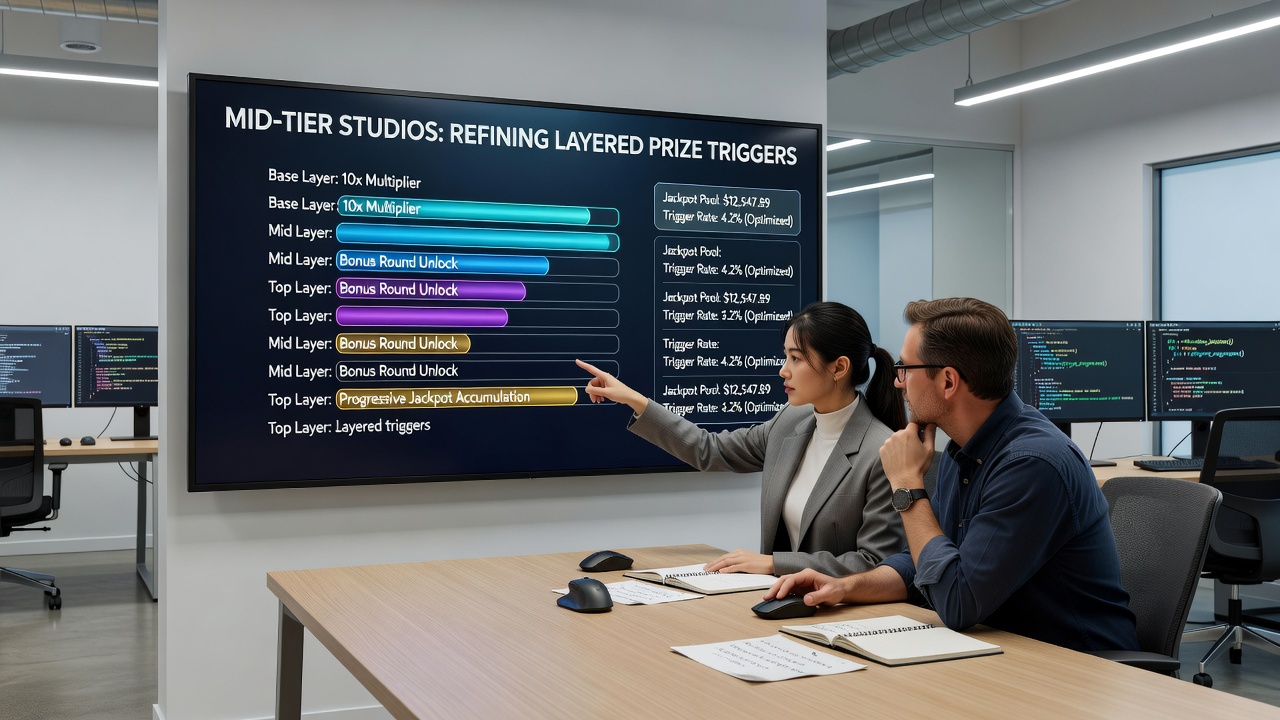
Layered prize triggers function as multi-stage activation sequences that build upon base game outcomes to unlock progressive or fixed jackpot tiers, and mid-tier studios isolate these sequences in demo environments to evaluate performance across platforms. Observers note that teams adjust trigger thresholds based on device-specific data such as touch latency on tablets versus desktop mouse precision, which affects how players interact with bonus symbols. Research indicates that studios frequently employ simulation software to replicate real-world usage patterns, including interruptions from incoming calls or background app activity on mobile devices.
Technicians at these studios map each layer of the trigger system to separate code modules, enabling targeted updates without overhauling entire game engines. This modular structure supports adaptation when moving from high-resolution desktop displays to compact smartphone interfaces, where visual hierarchy must shift to preserve trigger visibility. Figures from development pipelines reveal that testing in July 2026 highlighted improvements in cross-device synchronization after studios incorporated real-time device profiling into their demo protocols.
Demo Environment Testing Protocols
Demo environments serve as isolated sandboxes where developers replicate production conditions without risking live player funds or regulatory compliance issues. Mid-tier studios run thousands of automated play sessions in these setups to measure trigger activation rates under simulated network variability, such as fluctuating 5G connections or Wi-Fi handoffs. Experts have documented that these sessions incorporate randomized player behavior models drawn from aggregated telemetry, allowing teams to identify bottlenecks in prize layering before code reaches certification labs.
Teams prioritize edge cases during testing, including low-power mode restrictions on handheld devices that can alter animation timing and therefore delay prize trigger resolution. According to reports compiled by the Australian Gambling Research Centre, such timing discrepancies have prompted studios to introduce fallback mechanisms that recalibrate trigger sensitivity based on detected hardware capabilities. Studios also log memory usage and frame rates during extended demo runs to ensure that added layers do not degrade performance on older operating systems still in circulation.
Cross-Device Portfolio Adaptation Strategies
Adaptation across portfolios requires studios to maintain a single source of truth for jackpot logic while generating device-specific presentation layers. Mid-tier developers achieve this through responsive design frameworks that scale prize meter displays and animation complexity without altering underlying probability calculations. Data compiled by the American Gaming Association shows consistent application of these frameworks across multiple titles released in the first half of 2026, resulting in unified prize pool contributions regardless of access point.
Engineers integrate device detection libraries early in the refinement process, allowing demo environments to switch between configuration profiles automatically. This approach reduces manual rework when expanding a portfolio to include new tablet models or foldable phones entering the market. Those who have reviewed internal documentation note that version control systems track every parameter change, creating audit trails required by regulatory bodies such as the Nevada Gaming Control Board.
Integration with Existing Software Ecosystems
Portfolio-level integration demands that refined trigger systems interface cleanly with existing account management, payment processing, and compliance modules already deployed by operators. Mid-tier studios therefore embed standardized APIs that expose prize trigger states to backend services, ensuring that jackpot contributions register identically whether a session originates on desktop or mobile. This standardization supports seamless player progression across devices, a feature that has grown in demand as operators consolidate their offerings.
Testing in demo environments extends to these integrations through mock operator dashboards that simulate real-time balance updates and prize notifications. Researchers have observed that discrepancies in notification delivery timing across operating systems often surface during these combined tests, prompting adjustments to message queuing logic. Such refinements help maintain regulatory reporting accuracy without requiring separate code branches for each device category.
Conclusion
Mid-tier studios continue to iterate on layered prize trigger systems through disciplined demo environment practices that prioritize cross-device consistency in jackpot mechanics. These efforts rely on modular code design, automated simulation, and standardized integration points that align with broader portfolio requirements. Ongoing data collection from sources including the Australian Gambling Research Centre and the American Gaming Association informs further refinements as new hardware enters circulation. The structured approach supports reliable prize distribution while meeting technical and regulatory demands across varied deployment contexts.