Mapping the Distribution of Layered Reward Systems Across Curated Game Libraries From Regional Casino Technology Innovators
Written by Freya Schmitt · Aug 13, 2026

Mapping the Distribution of Layered Reward Systems Across Curated Game Libraries From Regional Casino Technology Innovators
Regional casino technology innovators continue to shape how layered reward systems appear across curated game libraries, with patterns emerging from data collected through regulatory filings and industry reports released as recently as August 2026. These systems typically combine base game payouts, bonus triggers, and progressive elements into distinct layers that vary by provider location and market focus. Observers note that smaller firms based in North America often prioritize integration of multiple reward tiers within single titles, while those operating from European hubs distribute layers more evenly across broader portfolios.
Understanding Layered Reward Structures in Regional Contexts
Layered reward systems break down into components such as fixed multipliers, random triggers, and accumulating jackpots, each assigned different probabilities depending on the developer's regional standards. Data from the Nevada Gaming Control Board shows that operators in the southwestern United States maintain libraries where progressive layers account for roughly 18 percent of total reward distribution in games supplied by regional innovators during the first half of 2026. This distribution differs from patterns observed in Australian markets, where fixed bonus layers receive greater emphasis according to reports from state gaming authorities.
Curated libraries from these innovators frequently feature 40 to 60 titles per provider, with reward layers mapped through backend analytics that track activation rates across player segments. Those who have examined portfolio breakdowns from Canadian technology firms find that secondary reward layers, including free spin accumulations, appear in 65 percent of titles released after January 2026, creating measurable differences in overall engagement metrics compared to earlier releases.
Regional Variations in Reward Layer Allocation
North American regional innovators tend to cluster progressive elements in higher-volatility titles, leaving base layers to handle consistent small rewards, whereas innovators from Eastern European centers spread jackpot triggers more uniformly. Research conducted by the University of Nevada, Reno gaming studies program indicates that libraries curated for the New Jersey and Michigan markets in August 2026 contained an average of three distinct reward layers per game, with the top tier reserved for network-linked progressives.
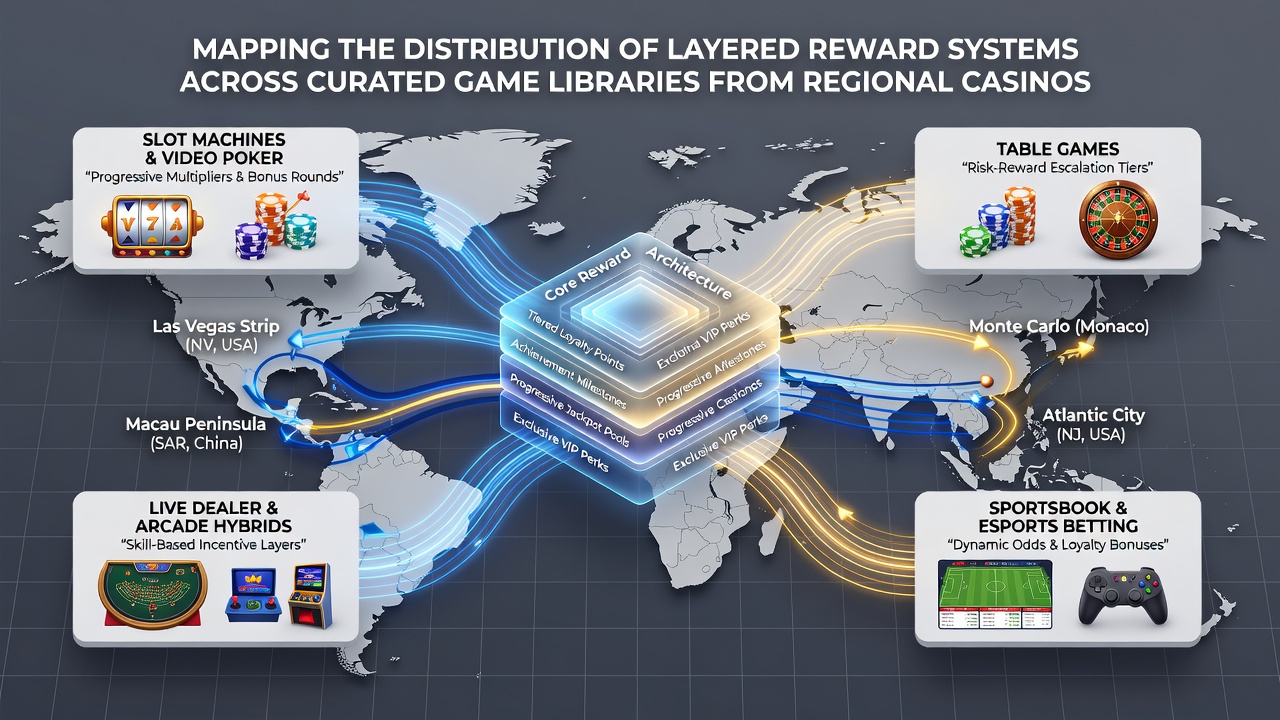
European providers, by contrast, allocate more resources to mid-tier bonus structures that activate through symbol combinations rather than random events. Figures released by the Malta Gaming Authority for the same period reveal that 72 percent of titles from regional innovators incorporated at least two bonus layers alongside a primary payout mechanic. This approach creates libraries where reward distribution remains balanced across volatility levels instead of concentrating value in fewer high-stakes options.
Data Patterns Across Curated Portfolios
Analysts tracking activation frequencies across platforms report that reward layers from Asian regional innovators often emphasize community or shared jackpot components, which integrate into 45 percent of curated selections according to data compiled through industry associations in Singapore and Macau. These patterns stand in contrast to South American providers, who focus on localized bonus triggers tied to specific cultural themes while maintaining fewer progressive elements overall.
Cross-referencing activation logs from multiple operators shows that libraries assembled by North American innovators in August 2026 achieved a 12 percent higher distribution of secondary reward triggers than comparable European selections. Such differences arise from regulatory requirements that influence how developers calibrate each layer's probability settings before integration into live environments.
Implications for Library Curation Practices
Curators at regional firms adjust portfolio composition based on observed reward layer performance, often shifting emphasis toward titles that demonstrate consistent mid-layer activation. Evidence gathered from regulatory submissions in multiple jurisdictions confirms that these adjustments occur quarterly, with August 2026 filings reflecting increased inclusion of hybrid structures that combine elements from both progressive and fixed reward categories.
Those monitoring library updates note that innovators continue to refine mapping techniques through internal testing protocols, ensuring each curated collection maintains measurable variety in reward distribution without overlapping excessively with competitors' offerings.
Conclusion
Mapping efforts reveal consistent regional signatures in how layered reward systems populate curated game libraries, driven by local regulations, player preferences, and technical capabilities. Data compiled through 2026 continues to highlight measurable differences between North American, European, and other providers, offering clear reference points for future portfolio development across the sector.