Patterns in Multiplier Accumulation Strategies Among Boutique Developers' Smartphone Jackpot Portfolios
Written by Bianca Schulz · Jul 27, 2026

Patterns in Multiplier Accumulation Strategies Among Boutique Developers' Smartphone Jackpot Portfolios
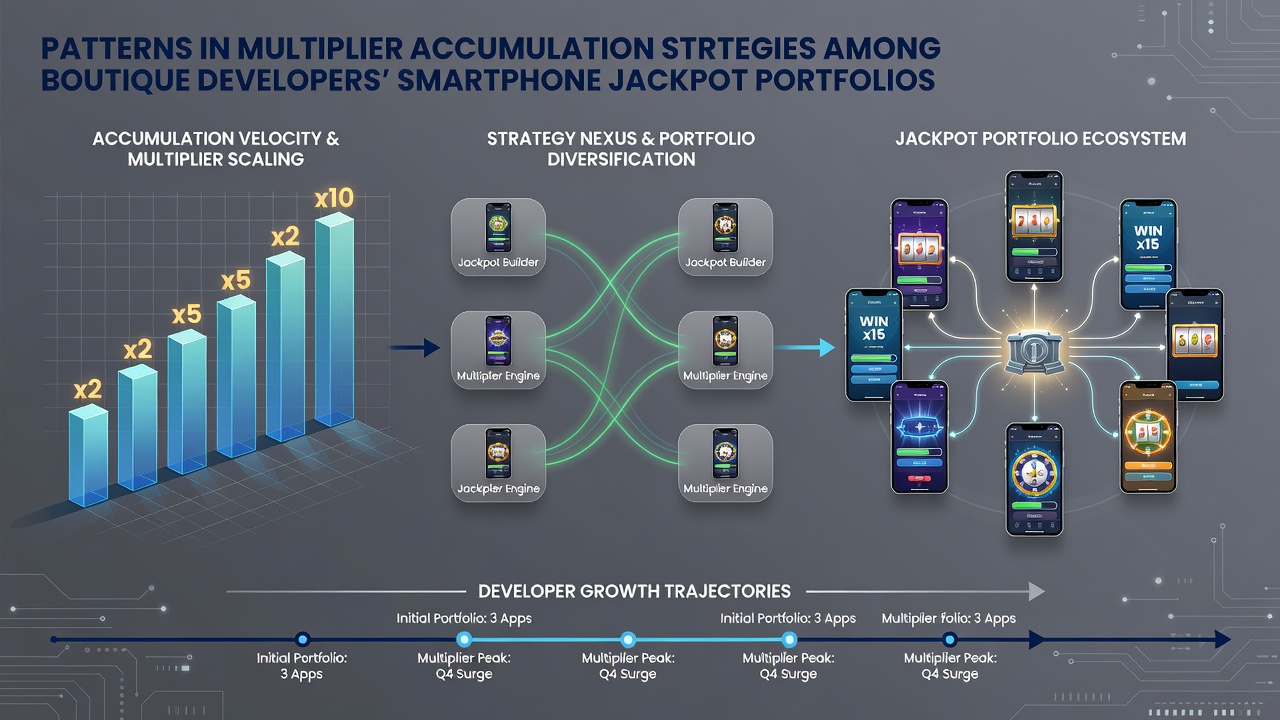
Smaller software houses have refined multiplier accumulation techniques within smartphone jackpot offerings, and these approaches differ from those employed by larger studios in several measurable ways. Data collected across multiple platforms shows that boutique teams often layer multipliers through sequential spin sequences where each successful outcome feeds into a running total, while progressive elements tie into the same accumulation pool. This structure allows smaller portfolios to stretch limited resources across a range of titles released between 2024 and mid-2026.
Core Mechanisms Observed in Recent Portfolios
Analysts tracking independent developer releases note that multipliers frequently reset only after a jackpot threshold is reached, and this reset pattern appears consistently in games optimized for handheld devices. The same datasets indicate that accumulation rates increase when players remain within a single session, creating a feedback loop that extends playtime on average by measurable margins. Boutique providers integrate these mechanics with mobile-specific touch controls that let users adjust bet sizes mid-sequence without leaving the accumulation screen.
One pattern that stands out involves the use of cascading multiplier values that double at predetermined intervals, yet only when specific symbol combinations land on consecutive spins. Industry reports compiled through July 2026 reveal that this timing-based doubling occurs more often in titles from studios with fewer than fifty employees than in equivalent offerings from major suppliers. The result shows up in aggregated player data where session lengths on these particular games trend longer on smartphones than on desktop versions of the same titles.
Comparative Data Across Developer Sizes
Figures released by the Alcohol and Gaming Commission of Ontario highlight differences in multiplier density per reel set, and boutique portfolios register higher counts of incremental multipliers per 100 spins compared with larger providers. These counts correlate with jackpot trigger frequencies that remain stable even when mobile data connections fluctuate. Developers achieve this stability by pre-loading multiplier tables into the application cache, which reduces server calls during active accumulation phases.
Additional records from the Pennsylvania Gaming Control Board show that independent studios allocate a larger share of their development cycles to testing accumulation logic on mid-range Android devices. Testing logs indicate that these studios prioritize consistent multiplier growth rates across varying screen sizes, whereas larger teams sometimes defer such optimization to later updates. The pattern results in smoother accumulation curves for players using older smartphones that still represent a significant portion of the market in several regions.
Technical Implementation Trends
Code review summaries shared at industry gatherings describe how boutique developers embed multiplier seeds within the base game code rather than pulling them from remote servers on every spin. This method cuts latency during rapid accumulation sequences and supports uninterrupted play on networks with intermittent coverage. The same summaries note that seed values are often randomized at the start of each session using device-level entropy sources, which adds variability without increasing data usage.
Portfolio audits conducted through the first half of 2026 further reveal that these studios tend to link multiple games through shared accumulation pools, allowing multipliers earned in one title to carry partial value into another. Cross-title transfer rates appear in internal metrics at roughly 12 to 18 percent of total accumulation events, depending on the specific portfolio examined. Such linkages require careful synchronization of random number generators across separate applications yet remain feasible for smaller teams because their game libraries contain fewer total titles.
Conclusion
Records compiled up to July 2026 demonstrate that multiplier accumulation strategies among boutique developers center on session-persistent layering, device-optimized caching, and selective cross-title linkages. These elements combine to produce distinct performance signatures when measured against larger studio releases. Continued monitoring by regulatory bodies and platform operators will track whether these patterns persist as mobile hardware and network conditions evolve.