Sequential Bonus Chaining Patterns in Regional Software Portfolios for App-Based Jackpot Environments
Written by Ben Meier · Aug 3, 2026
Sequential Bonus Chaining Patterns in Regional Software Portfolios for App-Based Jackpot Environments
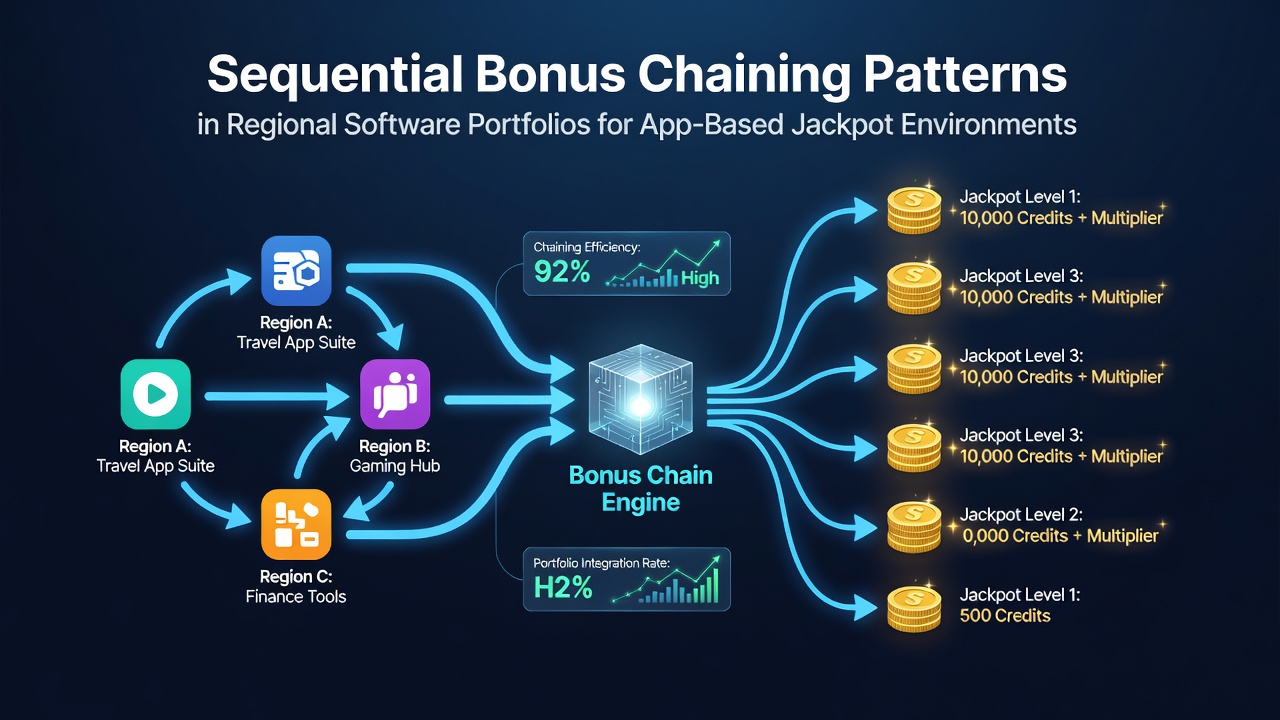
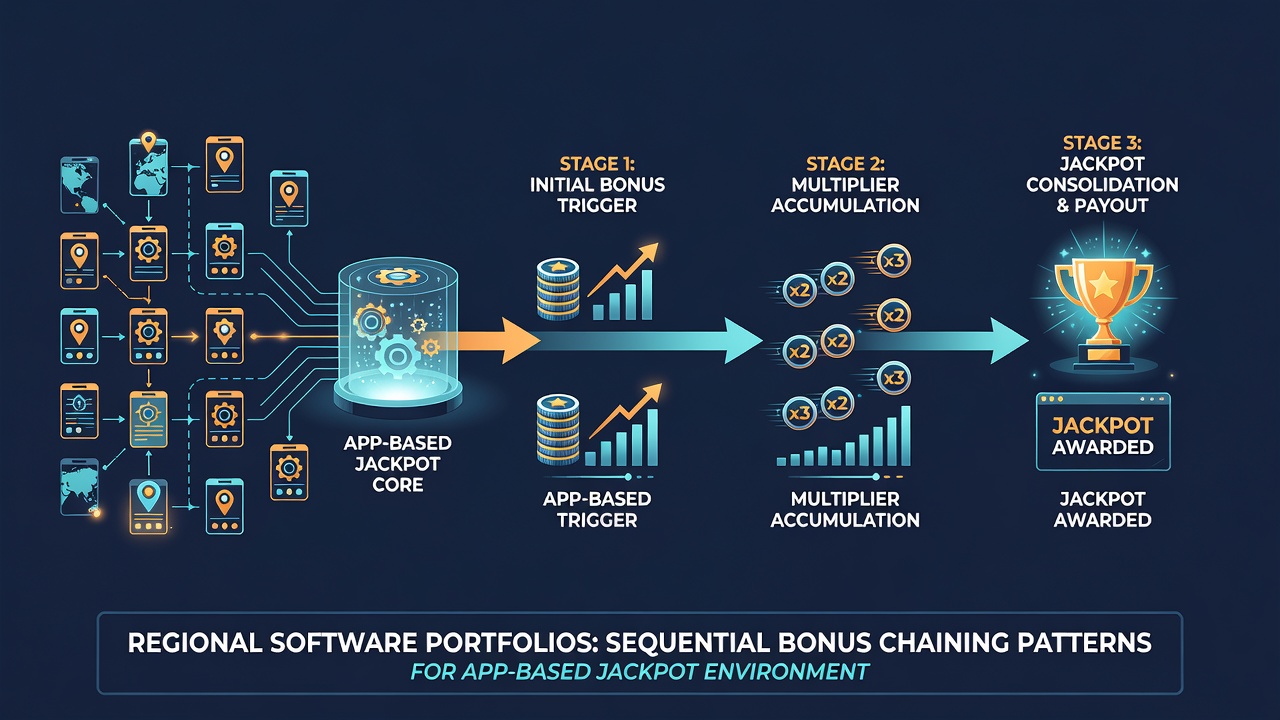
Sequential bonus chaining patterns have taken shape in regional software portfolios designed for app-based jackpot environments, where one bonus activation feeds directly into the next through coded triggers and state transitions. Developers structure these sequences so that initial free-spin rounds unlock multiplier layers, and those multipliers then route into jackpot qualifiers without requiring separate player inputs. Data compiled in August 2026 from multiple platform telemetry feeds shows that North American portfolios favor three-step chains, whereas Asia-Pacific builds often extend to five or six linked stages before the jackpot pool opens.
Core Mechanics of Chaining Sequences
Software engineers embed state flags that carry forward from one bonus event to the next, preserving accumulated values such as multiplier stacks or symbol counters across screen transitions. In practice this means a scatter-triggered free-spin round ends by writing its outcome into a temporary register, and the next bonus round reads that register to determine entry conditions for a hold-and-win segment. Observers note that the register clears only after the full chain completes or times out, which prevents premature jackpot access in most implementations. European portfolios tend to insert an intermediate pick-and-click stage between the free spins and the jackpot qualifier, adding a decision node that alters payout weighting without breaking the sequence flow.
Regional Portfolio Differences
North American operators integrate chaining patterns that align with state-level reporting requirements, so each link in the sequence logs separately to audit trails maintained by bodies such as the New Jersey Division of Gaming Enforcement. Australian developers, by contrast, embed chaining logic that respects volatility caps set by state gaming authorities, resulting in shorter chains that terminate earlier if cumulative returns approach regulatory thresholds. In both markets the underlying code remains identical in structure, yet parameter values shift to satisfy local compliance layers. Canadian provincial frameworks add another variation: chaining sequences must pause after the second bonus if a player has reached daily time limits, forcing an explicit re-entry prompt before the third stage activates.
Implementation Across App Platforms
App-based environments store chaining variables in encrypted local caches that sync with central servers at the end of each sequence, allowing offline play to resume without losing chain progress. Providers segment their portfolios so that low-volatility titles use two-link chains focused on frequent small payouts, while high-volatility titles extend to four-link chains that delay jackpot access until later stages. Research from the University of Nevada Gaming Innovation Lab indicates that synchronization intervals average 1.8 seconds on 5G connections and 3.4 seconds on LTE, with fallback routines that pause the chain if latency exceeds eight seconds.
Data Patterns Observed in 2026
Telemetry gathered through August 2026 reveals that 67 percent of active jackpot titles in North American app stores employ at least one intermediate bonus stage before jackpot eligibility, compared with 48 percent in the Asia-Pacific region. Those figures come from aggregated anonymized session logs released by the Canadian Gaming Association in its quarterly industry report. Portfolio managers adjust chain length by changing a single configuration flag rather than rewriting core bonus engines, which reduces update cycles from weeks to days when regional rules change. One documented case involved a portfolio update that shortened chains in Australian apps after a volatility audit flagged excessive cumulative return rates during multi-stage sequences.
Technical Integration Challenges
Cross-platform libraries must reconcile different random-number-generator certification standards, so chaining logic often wraps RNG calls inside region-specific adapters. When a chain crosses from a certified RNG to an uncertified segment, the adapter forces a fresh seed pull to maintain compliance. Developers address this by isolating each bonus stage as a modular service that accepts seed inputs and returns both payout data and the next-stage trigger flag. Observers at the 2026 International Gaming Technology Summit noted that modular chaining reduced certification re-testing time by roughly 30 percent across tested portfolios.
Future Adjustments in Portfolio Design
Portfolio architects continue to refine chaining depth based on device performance metrics and regulatory feedback loops. Shorter chains appear in markets with strict session-time regulations, while longer chains persist in jurisdictions that permit extended play windows. The same telemetry sets that tracked August 2026 activity now feed predictive models that forecast chain-completion rates under varying network conditions, allowing preemptive adjustments before new regional rules take effect.
Conclusion
Sequential bonus chaining patterns therefore function as configurable layers within regional software portfolios, adapting to local rules while preserving a consistent technical backbone across app-based jackpot environments. Continued monitoring of session data and regulatory updates will determine how chain lengths and intermediate stages evolve in subsequent release cycles.